Tokyo Tower Height and Facts: Numbers, Paint, Antennas and Records
Tokyo Tower's real height, weight, paint rules and broadcasting history, sourced from the official site and Wikipedia.
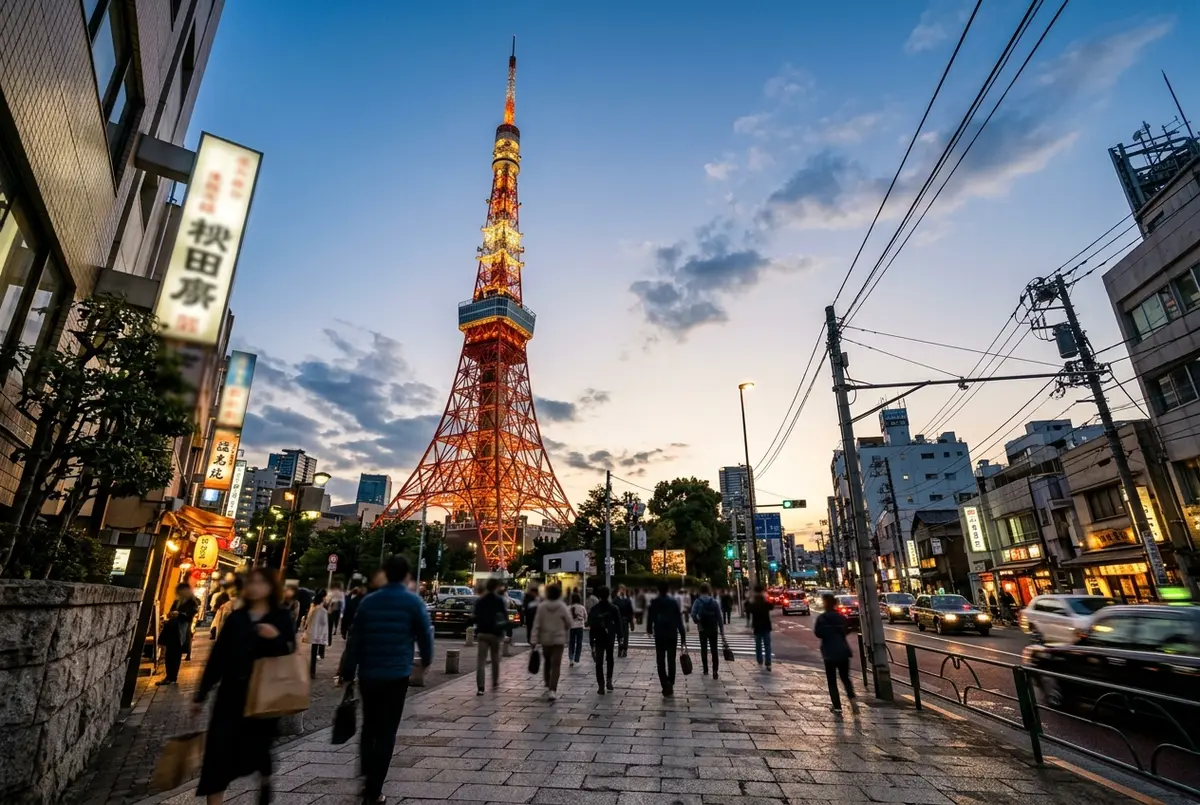
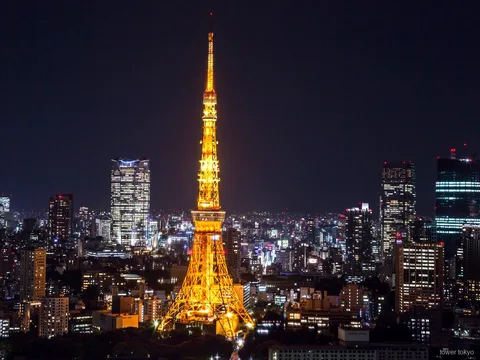
Tokyo Tower's architectural height is 333 m. It opened in 1958 as the world's tallest freestanding tower, weighs about 4,000 tons, and is painted orange and white under Japanese aviation law, not for style.
 Tokyo Tower Admission Ticket: Main Deck and Top Deck From $9.41 · Cheapest way up See dates
On this page 8 sections
Tokyo Tower’s architectural height is 333 m — a number that gets repeated everywhere, usually with zero context attached. What did that height survive? What’s the paint actually for, beyond looking nice in photos? And what does the tower even do now that Tokyo’s TV signal doesn’t come from it anymore? Those are the questions worth answering, not just the figure itself.
Tokyo Tower by the numbers
Source:Tokyo Tower official siteHow tall is Tokyo Tower?
Tokyo Tower’s architectural height is 333 m, with the antenna spire measuring 332.9 m. After the 2011 earthquake damaged the top antenna, the measured height briefly dropped to 315 m during repairs that wrapped up in 2012.
The official site lists the total height as 333 meters, and Wikipedia records the 2012 reduction to 315 m while that earthquake-damaged antenna got fixed. Both the official page and the encyclopedic record still cite 333 m as the figure today. The 2012 dip was a repair window, nothing more permanent than that.
What are the Main Deck and Top Deck heights?
The Main Deck sits at 150 m and the Top Deck at 250 m. A Tokyo Diamond Tour tacks a Lounge level on top of both.
Those three products — Main Deck, Top Deck Tour, Diamond Tour — are basically how the tower monetizes its own height, one slice at a time. Want the full breakdown of what each one actually buys you? See Main Deck vs Top Deck.
Is Tokyo Tower taller than the Eiffel Tower?
Tokyo Tower was built to be taller than the Eiffel Tower and briefly held the title of world’s tallest freestanding tower, and it did that while weighing roughly 3,300 tons less, thanks to a thinner, simpler steel lattice.
| Fact | Tokyo Tower |
|---|---|
| Height vs Eiffel Tower | About 9 m taller at completion |
| Weight vs Eiffel Tower | About 3,300 tons lighter |
| World record held | Tallest freestanding tower, 1958 to 1967 |
| Year completed | 1958 |
Wikipedia records Tokyo Tower as roughly 9 m taller than the Eiffel Tower once its antenna went up. Thinner, simpler, so it ends up about 3,300 tons lighter despite the extra height. Funny how that works.
Why is Tokyo Tower orange and white?
The white and international orange paint scheme is required by Japanese aviation safety law for tall structures — it’s not a design or branding choice at all — and a full repaint burns through about 28,000 litres of paint.
Say you’re planning photos and wondering why the tower isn’t done up in some brand colour the way a lot of modern landmarks are. There’s no choice in it. Japanese aviation safety regulations require that orange and white scheme on anything this tall, and the tower used to get repainted every five years, stretched to about seven after a more durable coating went on in 2019.
How much does Tokyo Tower weigh?
Tokyo Tower weighs about 4,000 tons. Steel lattice, designed by Tachu Naito, modeled on the Eiffel Tower.
Wikipedia gives the weight as about 4,000 tons, and honestly that number only clicks once you set it next to the Eiffel comparison above. Same shape, roughly. Way less steel.
What records does Tokyo Tower hold?
It was the world’s tallest freestanding tower from 1958 to 1967, and Japan’s tallest structure until Tokyo Skytree finished in 2012.
GO TOKYO confirms it was the tallest freestanding tower in the world when built, and Wikipedia adds it also held the title of world’s tallest lattice tower from 1958 to 1973. Want the full story of how that unfolded? See the full history of Tokyo Tower.
What is Tokyo Tower used for today?
It’s still an active broadcasting facility for FM radio stations Tokyo FM and InterFM, even though television broadcasting moved to Tokyo Skytree in 2012. Tourism and antenna leasing are its main revenue now.
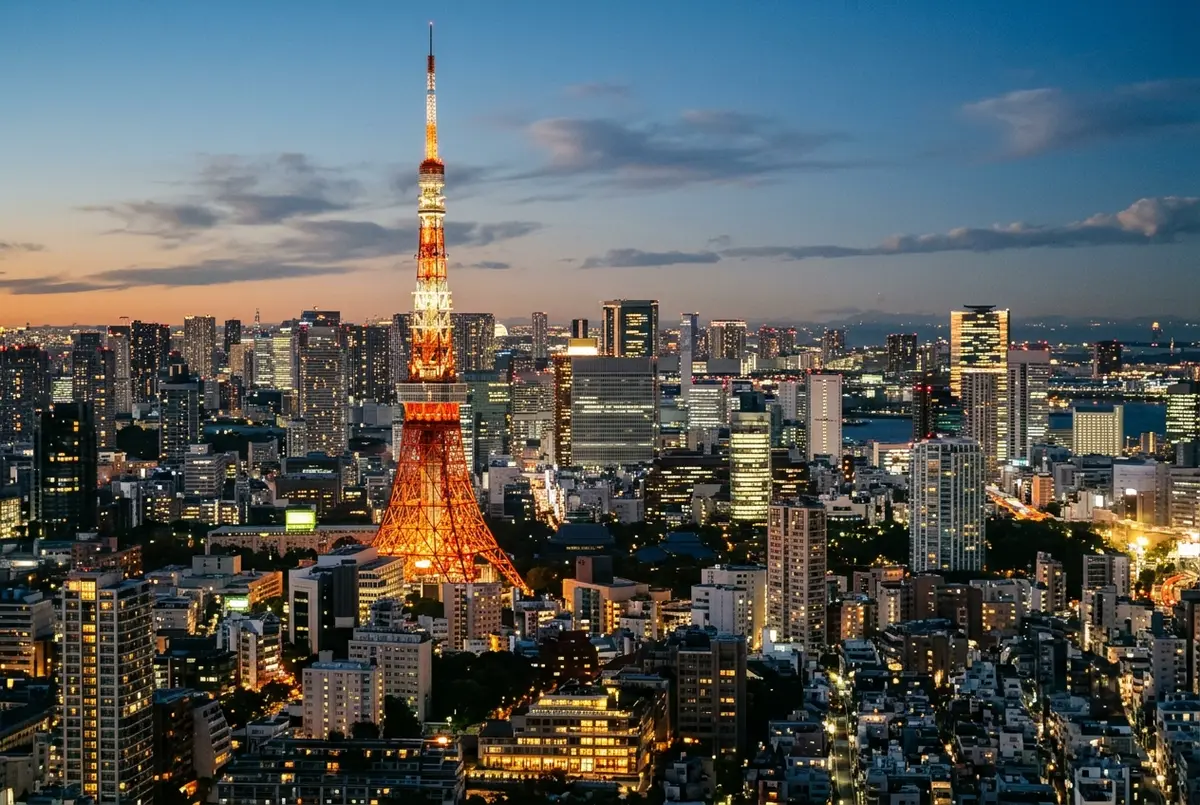
Wikipedia confirms the tower still supports FM radio broadcasting even with television having moved to Tokyo Skytree. That orange and white paint you see from Zojoji Temple or Shiba Park isn’t just for show either — it marks an operating broadcast structure under aviation law.
The paint rules alone are worth a closer look, honestly: see why Tokyo Tower is red and white. For its place in film and games, see Tokyo Tower in anime, film and games. To decide whether climbing up is actually worth it, see is Tokyo Tower worth it, and for how it stacks up against the city’s other decks, the best observation decks in Tokyo, compared. The full Tower Tokyo guide links every page on the site.
Questions
When was Tokyo Tower built?
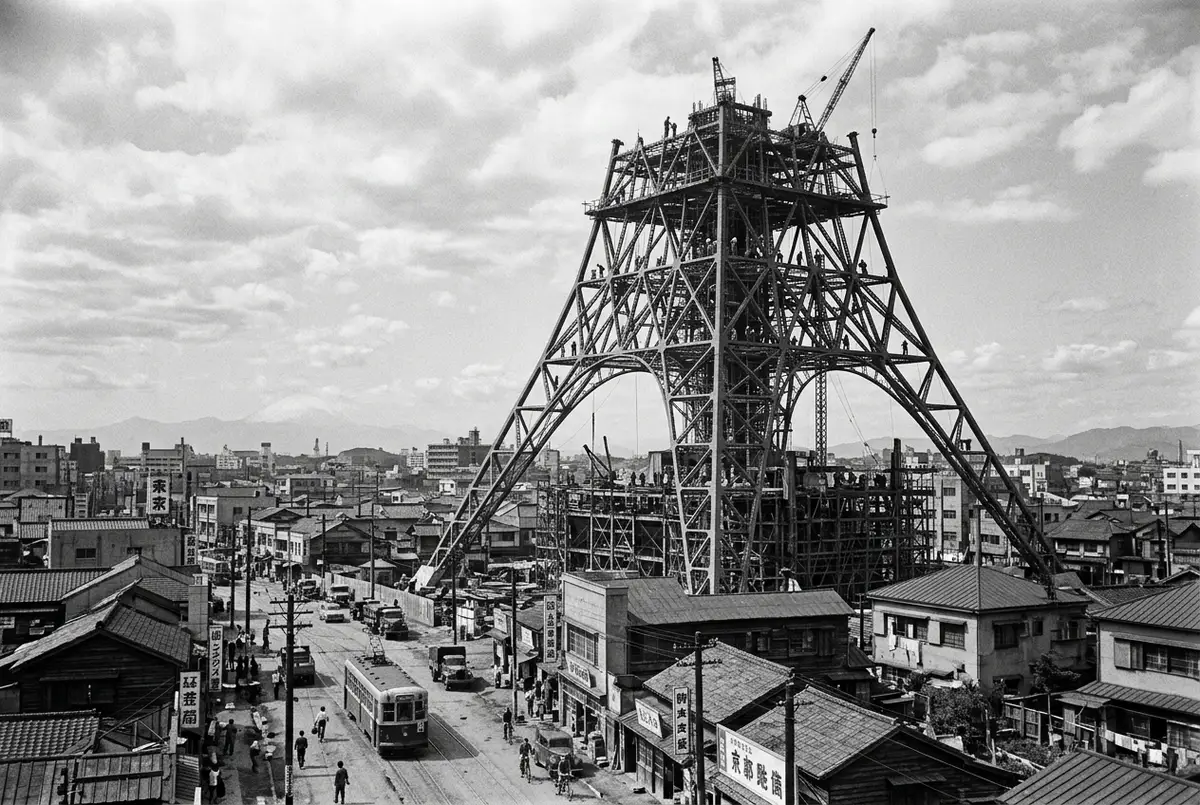
Construction started in June 1957. The tower opened to the public on 23 December 1958, with the antenna itself bolted into place that October.
How many steps are there to the Main Deck?
600 of them, available Saturdays, Sundays and holidays as an alternative to the elevator. Every other day, the elevator’s your only option.
Who designed Tokyo Tower?
Engineer Tachu Naito, with structural engineering by Nikken Sekkei and construction by Takenaka Corporation. Modeled on the Eiffel Tower, but built taller on purpose.
How often is Tokyo Tower repainted?
Traditionally every five years, stretched to roughly seven after a more durable coating went on in 2019. A full repaint uses about 28,000 litres of paint.