Why Is Tokyo Tower Red and White? The Paint, the Rules and the Repaints
Red tower in Tokyo: Tokyo Tower's international orange and white comes from an old aviation law. Why it keeps the color, and how often it's repainted.
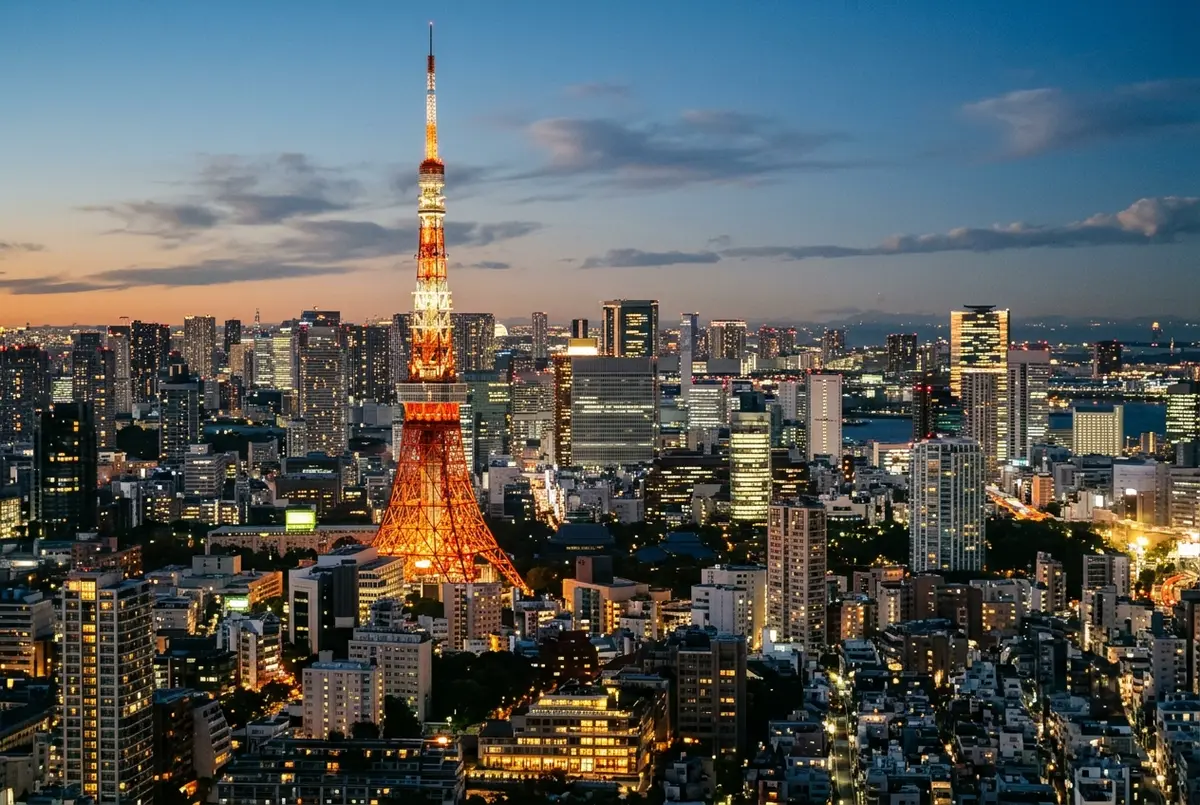
Tokyo Tower is painted in international orange and white, a scheme set by Japan's Civil Aeronautics Act when it opened in 1958. The rule has since loosened, but the tower keeps the colors as part of its identity, repainted on a 5 to 7 year cycle.
 Tokyo Tower Admission Ticket: Main Deck and Top Deck From $9.41 · Cheapest way up See dates
On this page 7 sections
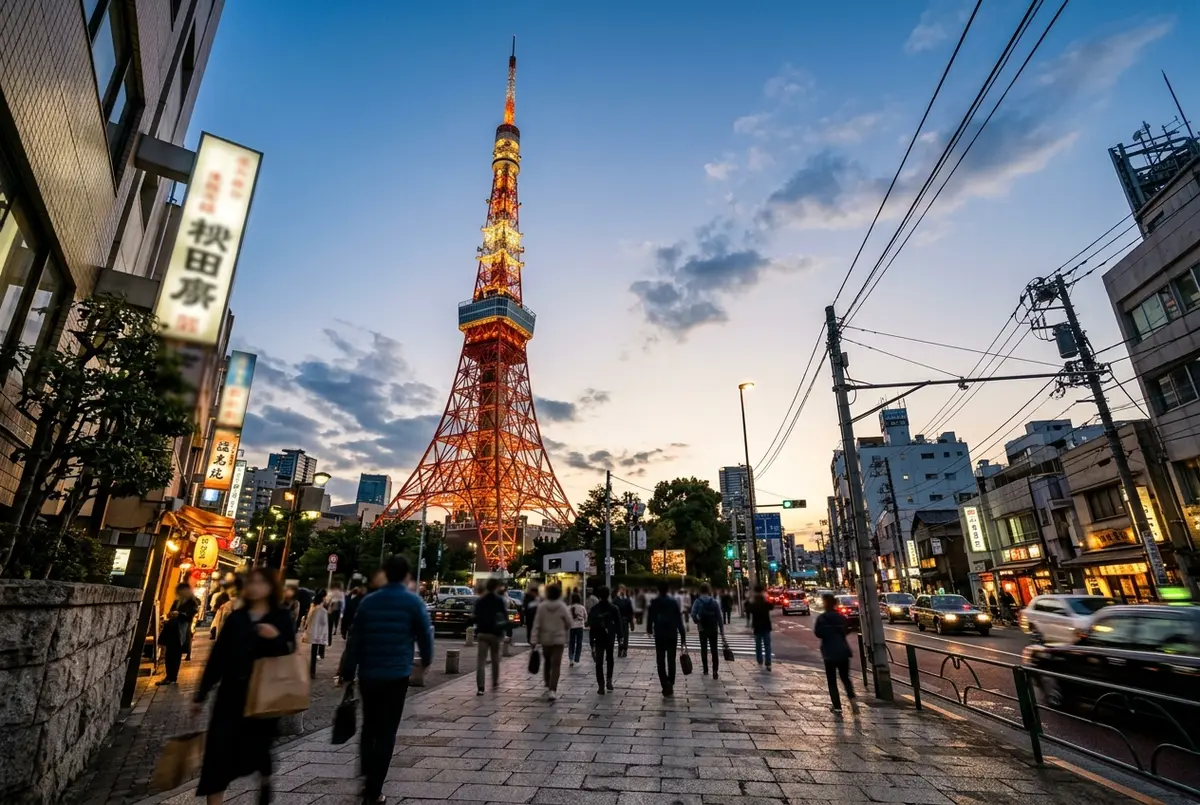
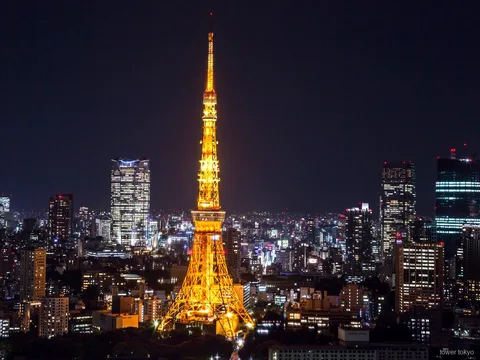
What is the red tower in Tokyo? It’s Tokyo Tower - a 333 m lattice tower in Minato ward, painted in alternating bands of international orange and white. Nothing random about that color, either. It comes from an aviation rule that’s decades old by now, and somehow it’s outlived the very law that forced it into existence.
The paint, by the numbers
Source:Wikipedia and THE GATEWhat is the red tower in Tokyo?
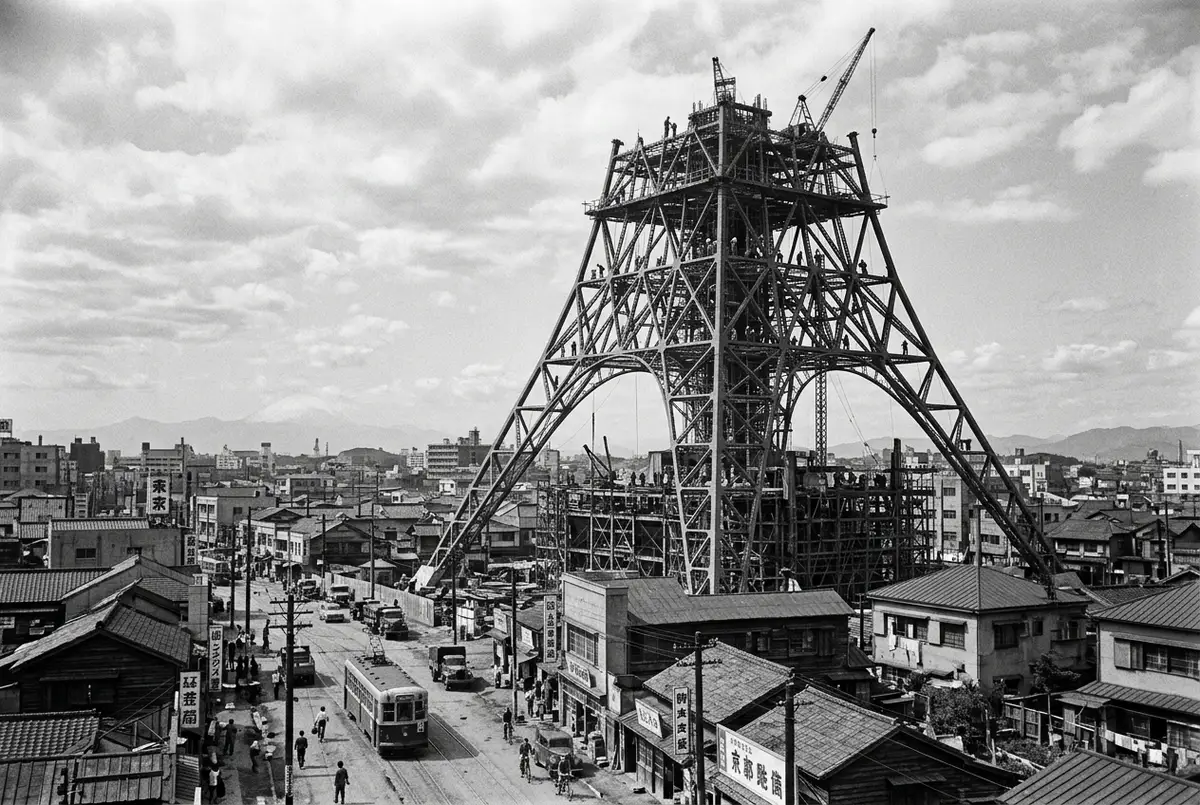
Tokyo Tower is the 333 m (1,093 ft) lattice tower in Minato, Tokyo. Built to carry television and radio antennas, it opened to visitors back in 1958. The top observatory sits at 249.6 m, but honestly, what everyone remembers is the orange and white banding.
I’d call the color the tower’s single most recognizable feature. More than the height, more than the antennas sitting on top of it. It’s the first thing most photos of the tower are really about, whether the photographer realizes it or not.
Why is Tokyo Tower painted red and white?
Blame the Civil Aeronautics Act. The orange-and-white scheme follows Japan’s Civil Aeronautics Act, which required tall structures to be marked for aircraft visibility when the tower went up in 1958. At that height, in that era, a plain steel tower read as a hazard, something a pilot needed to spot fast.
So the tower is painted white and international orange to meet the air safety regulations of the time. And the banding itself isn’t even the original pattern: Nippon.com notes the aviation-marking pattern shifted from 11 divisions to 7 in 1986. That’s why older photos show slightly different striping than what the tower wears now. Easy to miss if you’re not looking for it.
Is Tokyo Tower’s color really red?
Not quite, no. The color is technically international orange, a shade sitting somewhere between red and yellow, laid down in alternating bands with white rather than one solid coat. From a distance, especially at sunset, it reads red. Up close the hue is clearly orange, no argument about it.
International orange is the same family of color used on aviation-marked structures worldwide. It’s chosen because it stands out hard against sky and cloud, which is really the whole point.
Why isn’t Tokyo Skytree painted the same way?
Structures fitted with high-intensity aircraft warning lights get a pass on the color rule entirely, which is why the much taller Tokyo Skytree uses a different finish instead of orange-and-white bands. Skytree leans on lighting instead of paint to hit the same safety goal. Same problem, different fix, four decades apart.
| Tower | Height | Paint scheme | Why |
|---|---|---|---|
| Tokyo Tower | 333 m | International orange and white bands | Built 1958, before the warning-light exemption was common practice |
| Tokyo Skytree | 634 m | Plain finish, warning lights | Exempt from the color rule under high-intensity lighting |
How often is Tokyo Tower repainted?
Traditionally every five years. The tower was repainted every five years, a job THE GATE describes as done by hand by about 4,200 workers over roughly a year. Think about that for a second: a full year, thousands of hands, for a paint job. Then a 2019 repaint used a more durable coating that stretched the cycle to seven years, with the next repaint projected for 2026.
Say you’re visiting in 2026 and wonder whether the orange you’re looking at is fresh or fading. Check the projected repaint date above against your own travel dates, don’t just assume every visit catches the same finish. A freshly repainted tower looks noticeably brighter than one a few years deep into its cycle - you can genuinely see the difference in photos taken a year apart.
Is Tokyo Tower still legally required to be this color?
No, not strictly, not anymore. The aviation rule has loosened since 1958, and newer tall structures with warning lights skip the paint requirement entirely. So why does Tokyo Tower still bother? Because the color’s become part of how people recognize the thing. Not the law. Identity, mostly.
That’s also why a repaint, when it happens, keeps the same bands instead of switching to something plainer. Change the paint and you’ve changed the landmark, and nobody wants that.
If you want to see the color in person, the admission ticket gets you onto the Main Deck at 150 m, close enough to actually see the brushwork on those bands. For the rest of the tower’s vital statistics, see the full rundown of Tokyo Tower’s height and facts, and for why it was built in the first place, see the tower’s broadcasting history.
Questions
How tall is Tokyo Tower?
333 m (1,093 ft), with the Top Deck observatory sitting at 249.6 m.
When did Tokyo Tower open?
December 23, 1958. It opened as a broadcasting tower for Tokyo, not a tourist attraction, though that part followed soon enough.
Who built Tokyo Tower?
It went up as a communications tower for television and radio broadcasting. The design and height were set by what broadcasting needed in that era, tourism came later and almost as an afterthought.
Is Tokyo Tower taller than the Eiffel Tower?
Yes, just barely. Tokyo Tower runs 333 m, a few meters past the Eiffel Tower’s original structure, and that comparison was no accident. The builders knew exactly what they were measuring against.